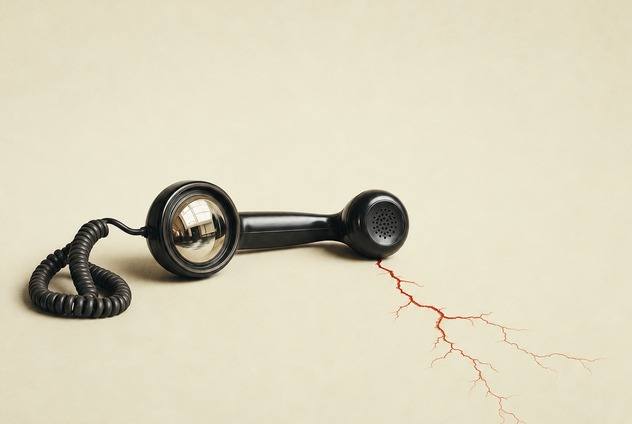
I was listening to a piece about the history of American polling this week, and it opens with the most famous wrong number in the business. In 1936, The Literary Digest mailed its straw ballot to more than ten million people. The magazine had called all five of the previous presidential elections correctly. This time it got 2.4 million ballots back — still one of the largest polls ever run — and predicted that Alf Landon would beat Franklin Roosevelt by about fourteen points. Roosevelt won with about sixty-one percent of the vote. The Digest never recovered and folded two years later.
The lesson everyone took from that failure was not “bigger sample.” The Digest built its list from telephone directories, automobile registrations, and its own subscribers — people who could afford a phone or a car in 1936, and who leaned Republican. That same year an advertising executive named George Gallup ran a poll on roughly fifty thousand people, chosen to resemble the electorate instead of the phone book, and called the winner. (Historians still argue over how much blame the phone book deserves — one analysis of a 1937 Gallup follow-up found the bigger problem was all the Roosevelt voters who never mailed their ballots back. Either way, the list had decided who it would hear from.) Modern polling was born there: the size of the sample stopped being the story, and who is in the sample became the story.
The phone went quiet
Here is what I was actually thinking about while I listened. The telephone has spent my whole lifetime going from the most intimate object in the house to the one nobody answers. I don’t know anyone who picks up for a number they don’t recognize. These days you’d be a fool to — it’s usually spam.
That is a real problem for pollsters, not a personal quirk. The TCPA effectively bans autodialing cell numbers, so every call is placed by hand; one industry study put a completed interview at about $45 for manual dialing, against roughly $30 where a predictive dialer can legally do the work. And hardly anyone answers. Pew measured telephone poll response rates down to about 6 percent in 2018, from around 9 percent for most of that decade, in a country receiving an estimated 3.4 billion robocalls a month. A pollster is asking a stranger to pick up an unknown number and stay on the line — at the exact moment everyone has trained themselves never to do it.
And it goes past polling. Think about your own week. How many actual phone calls did you get? Mine arrive as Slack and Teams messages, and when a conversation is worth having it happens on Zoom. The only calls I take are from family, because I know their numbers. The world has mostly stopped being on the phone, and polling still lives there.
What the free tier pays with
So what measures sentiment when the phone goes quiet? I think we’re already looking at it. I experimented with buying ads on ChatGPT — OpenAI opened self-serve ads for businesses this year, and they run for free and low-cost tier users while paying users see none of them. My test was expensive and I didn’t get conversions worth the money. But notice what the surface is. A free chatbot is where people type what they want, in their own words, before they’ve told anyone else what they want. That is intent data at a depth the ad industry has been chasing forever.
Chapter 4 of my book walks through real-time bidding as it works today: a page loads, an auction fires, and within about a hundred milliseconds dozens of companies are told roughly who you are and bid on the right to show you something. Now picture that machinery attached to a chat transcript. Not “visited a page about running shoes” — the question you asked, the hesitation, the worry behind it. Ad-supported chat at scale means profiling at a scale that has never existed, and the free tier pays for the service with exactly that. OpenAI says its ads business passed a billion dollars in annualized revenue within about two hundred days of launch.
This is my guess about the quiet math behind the valuations. Anthropic and OpenAI both confidentially filed for IPOs this year. Subscription revenue alone doesn’t underwrite numbers like that. The advertising-and-data business might, because it is the model Google proved — with a richer query stream than Google ever had.
And here is the odd little secret in all of it: advertisers probably already know when the polls are wrong. They’re not smarter than pollsters; they just watch behavior at auction speed. They see what people actually ask for and click on, not what they’ll admit to a stranger over the phone. Polling has always measured what people are willing to say. Chat is going to measure what people can’t help revealing.
Before you vote
Which is my way of saying this is another post influenced by current events: the midterms are on November 3. If this is your kind of problem, it is the subject of my book, The World That Agrees With You, available in paperback and Kindle. And more to the point — vote. Whatever the models think you believe, the ballot is the one count that’s real. I can’t remember an election where it mattered more to cast it yourself.